Feeling like summer has passed too quickly? Discover how an August mental health reset can help you manage anxiety, stress and overthinking and prepare for September with greater calm and confidence.

Where did the summer go?

August can be a strange month.

The days are still long, summer may still be in full swing, and there may be holidays, days out and opportunities to spend time outdoors.

But somewhere in the background, September is beginning to appear.

You might find yourself thinking:

“I haven't made the most of the summer.”

“Where has the year gone?”

“I need to get myself organised.”

“I should have achieved more by now.”

Or perhaps you're already thinking about everything September will bring — work, school, college, appointments, routines, responsibilities and everything else that may have been put on the back burner during the summer.

For some people, this can create a sense of pressure rather than excitement.

If you're feeling unsettled, overwhelmed or anxious as summer begins to wind down, you're certainly not alone.

Rather than seeing August as a month when you need to suddenly get your life together, perhaps you could use it as an opportunity for a gentle mental health reset.

You don't need to "fix" everything before September

One of the traps we can fall into is believing that we need to have everything figured out before a new month, season or chapter begins.


We may create a long list of things we need to change:

  • Get organised
  • Exercise more
  • Eat better
  • Get back into a routine
  • Stop procrastinating
  • Sort out our finances
  • Become more productive
  • Get on top of work
  • Spend more time with family
  • Make more plans
  • Worry less

The list can quickly become overwhelming.

And when we feel overwhelmed, we may actually find it harder to take action.

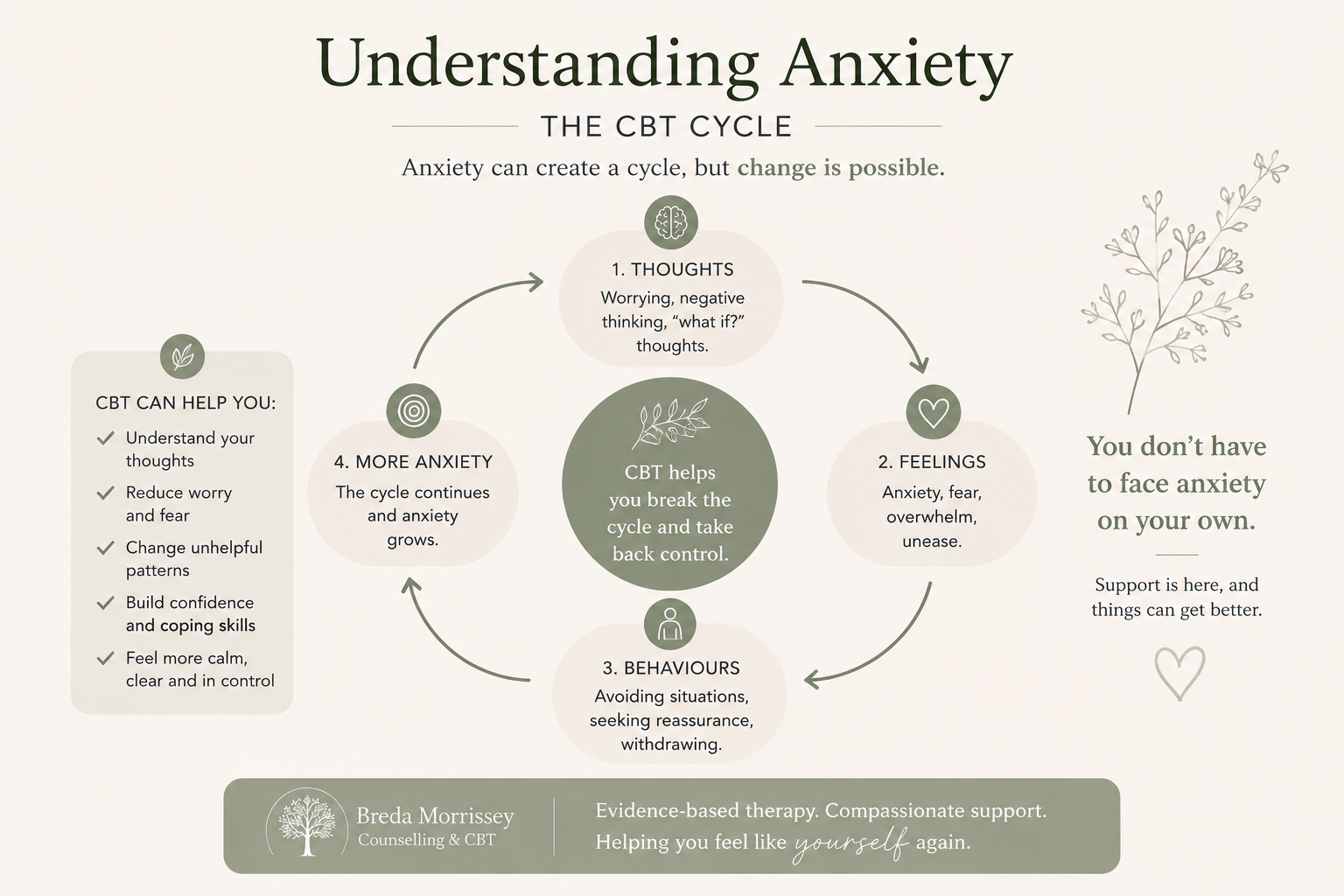
A CBT approach encourages us to look at the connection between our thoughts, feelings and behaviours.

For example:

Thought:
“I have so much to sort out before September.”

Feeling:
Anxious, overwhelmed or stressed.

Behaviour:
Avoiding things, procrastinating, scrolling on your phone or feeling unable to decide where to begin.

This can then reinforce the original thought:

“See? I can't even get organised.”

Instead, try reducing the size of the task.

Ask yourself:

“What is one small thing I can do today that would make tomorrow a little easier?”

You don't need to solve everything at once.

Your summer doesn't have to look like everyone else's

Social media can make comparison particularly difficult.

We may see holidays, family days out, weddings, concerts, meals, beautiful scenery and people appearing to have the perfect summer.

It can be easy to compare their highlights with our everyday reality.

You might think:

“Everyone else is having a better summer than me.”

“I'm not doing enough.”

“I should be happier.”

“I'm wasting the summer.”

But social media doesn't show the whole picture.

Someone else's holiday photographs don't tell you how they felt before or after the photograph was taken. They don't show their worries, difficult conversations, financial pressures, loneliness or uncertainty.

When you notice yourself comparing, try asking:

“What evidence do I have that I'm seeing the whole story?”

And perhaps more importantly:

“What would I choose to do with my time if I wasn't comparing my life to someone else's?”

That question can be surprisingly powerful.

Notice the "shoulds"

CBT can be particularly helpful for identifying unhelpful thinking patterns.

One that can become very noticeable during summer is “should” thinking.

You may notice thoughts such as:

  • “I should be enjoying myself.”
  • “I should have travelled more.”
  • “I should have achieved more.”
  • “I should be more relaxed.”
  • “I should be spending more time with people.”
  • “I shouldn't be feeling anxious.”
  • “I should be further ahead in my life.”

The problem with “should” is that it can turn a preference into a rule.

Instead of:

“I should be enjoying every minute of summer.”

Try:

“I'd like to enjoy my summer, but I won't enjoy every day — and that's okay.”

Instead of:

“I should have achieved more.”

Try:

“I can acknowledge what I've managed this year and decide what matters to me next.”

This isn't about replacing every negative thought with an unrealistically positive one.

It's about developing a more balanced and compassionate way of thinking.

Create a gentle routine rather than a strict one

Summer often means routines change.

You may stay up later, sleep differently, take holidays, have different working hours or simply have a more relaxed approach to your days.

There is nothing wrong with that.

However, if you notice yourself feeling unsettled, gradually bringing a little structure back into your day can help.

You don't need a rigid timetable.

Start with a few anchors.

For example:

Morning:
Get up around a similar time and avoid immediately reaching for your phone.

Daytime:
Include some movement, fresh air or time outside if possible.

Evening:
Create a wind-down routine that gives your mind an opportunity to slow down.

Sleep:
Try to keep your sleep and wake times reasonably consistent.

The HSE highlights the importance of healthy habits and routines as part of supporting mental wellbeing.

Think structure, not perfection.

If you have a day where everything goes out the window, you haven't failed.

You simply begin again the next day.

Don't turn your August reset into another source of stress

There is a danger that a blog about a “reset” can accidentally become another productivity checklist.

That's not what this is about.

A mental health reset isn't:

“How much can I achieve before September?”

It's more about asking:

“What do I need more of, and what do I need less of?”

Perhaps you need:

  • More rest
  • More time outdoors
  • More connection
  • More boundaries
  • More enjoyable activities
  • More compassion towards yourself

And perhaps you need less:

  • Comparing yourself to others
  • Overthinking
  • People-pleasing
  • Saying yes when you mean no
  • Doom-scrolling
  • Criticising yourself
  • Trying to control things you cannot control

Your answers don't have to be dramatic.

Small changes can make a meaningful difference.

Try an August mental health check-in

Take ten minutes this week and ask yourself these questions:

1. What has been taking up most of my mental energy?

Is there something you've been worrying about repeatedly?

2. What am I telling myself about where I "should" be in life?

Notice the expectations you're placing on yourself.

3. What am I doing that genuinely helps me feel better?

This might be walking, talking to someone, spending time in nature, exercising, reading, mindfulness or simply having quiet time.

4. What am I doing that leaves me feeling worse?

Perhaps you're spending too much time comparing yourself to others, avoiding something important or repeatedly checking your phone.

5. What is one thing I could let go of?

It doesn't have to be a huge thing.

Maybe it's an unrealistic expectation.

6. What is one small thing I would like to carry into September?

Choose something realistic.

Perhaps it's going for a walk three times a week, protecting your evenings, practising a CBT technique or making more time for yourself.

You don't have to wait until September to start feeling better

Sometimes we tell ourselves:

“I'll deal with that in September.”

But if something has been bothering you for months, you don't necessarily have to wait for a new season before doing something about it.

You can start with one conversation.

One small change.

One appointment.

One decision to stop ignoring what you're feeling.

If you're experiencing persistent anxiety, stress, low mood, overthinking or low confidence, talking to a professional can provide a safe space to understand what's happening and explore different ways of coping.

CBT can help you identify patterns of thinking and behaviour that may be keeping you stuck and develop more helpful ways of responding.

At Breda Morrissey CBT & Counselling, I offer online counselling and CBT for adults across Ireland and the UK. Sessions are tailored to you rather than following a one-size-fits-all approach.

Your August doesn't need to be perfect

Perhaps the biggest reminder is this:

You don't need to make the rest of the summer count.

You don't need to squeeze every possible experience into August.

You don't need to become a completely different person before September.

And you don't need to have everything figured out.

You can simply pause.

Notice how you're doing.

Decide what matters.

Take one small step.

Then another.

Sometimes looking after your mental health isn't about making huge changes.

Sometimes it's about giving yourself permission to slow down, challenge an unhelpful thought, reconnect with what matters and remember that you are allowed to begin again at any time of year.

If you would like support

If anxiety, overthinking, stress or low confidence are making everyday life feel difficult, you don't have to work through everything alone.

I offer online CBT, counselling and psychotherapy across Ireland and the UK, providing a confidential and supportive space to explore what's going on and work towards meaningful change.

If you feel ready, you can get in touch to arrange an initial appointment or simply ask any questions you may have.

You don't have to have everything figured out before reaching out. Sometimes starting the conversation is the first step.

Breda Morrissey CBT & Counselling
Online CBT & Counselling | Ireland & UK

www.bredamorrissey.com
by Breda Morrissey 16 June 2026
Caring for a loved one can be one of the most meaningful roles we take on in life. Whether you're supporting an ageing parent, a partner with a chronic illness, a child with additional needs, or someone going through cancer treatment, caregiving often comes from a place of love and commitment. However, while caring for someone else, it's easy to lose sight of your own needs. Many carers quietly carry an enormous emotional, physical, and mental burden. They may spend so much time focusing on another person's wellbeing that they neglect their own. Over time, this can have a significant impact on their health, relationships, and quality of life. The Emotional Impact of Being a Carer Being a carer can bring a wide range of emotions. Alongside love and compassion, many carers experience: Stress and overwhelm Anxiety about the future Feelings of guilt when taking time for themselves Frustration or resentment Sadness, grief, and loss Loneliness and isolation Emotional exhaustion Many carers feel they must remain strong at all times. They may worry that expressing their struggles means they are failing the person they care for. In reality, these feelings are a normal response to the demands of caregiving. The Physical Toll The impact of caregiving isn't only emotional. The ongoing demands can affect physical health too. Many carers report: Poor sleep Fatigue and low energy Increased stress levels Changes in appetite A weakened immune system Headaches, muscle tension, and other stress-related symptoms When someone is constantly focused on another person's needs, their own health appointments, exercise routines, hobbies, and social connections are often pushed aside. When Your Identity Becomes "The Carer" One of the less talked about challenges of caregiving is the loss of personal identity. Over time, life can become centred around appointments, medications, responsibilities, and practical tasks. Many carers find themselves asking: "Who am I outside of this role?" The activities, friendships, and interests that once brought joy may gradually disappear, leaving carers feeling disconnected from themselves. Signs You May Be Experiencing Carer Burnout Carer burnout can develop slowly and may include: Feeling constantly exhausted Becoming irritable or emotionally reactive Difficulty concentrating Feeling detached or numb Losing interest in activities you once enjoyed Increased anxiety or low mood Feeling hopeless or trapped Recognising these signs early is important. Burnout is not a sign of weakness; it's often a sign that you've been carrying too much for too long without enough support. Looking After Yourself While Caring for Others Self-care is not selfish. It is essential. Just as we are instructed to put on our own oxygen mask before helping others on an aeroplane, carers need to protect their own wellbeing in order to continue supporting those they love. Here are some ways to begin: Give Yourself Permission to Rest Rest is not something that must be earned. Even short periods of downtime can help replenish emotional and physical energy. Stay Connected Isolation can intensify stress and emotional exhaustion. Try to maintain contact with supportive friends, family members, or support groups who understand what you're experiencing. Accept Help Many carers struggle to ask for help. If someone offers practical support, consider accepting it. Even small acts of assistance can make a meaningful difference. Prioritise Small Moments of Self-Care Self-care doesn't need to involve expensive retreats or hours of free time. A short walk, a cup of tea in peace, reading a few pages of a book, or practising mindfulness for ten minutes can help restore balance. Acknowledge Your Feelings It's okay to feel frustrated, tired, sad, or overwhelmed. Allowing yourself to recognise and process these emotions can reduce the burden of carrying them alone. Consider Professional Support Therapy can provide a safe, non-judgemental space to explore the challenges of caregiving. It offers an opportunity to process difficult emotions, manage stress, develop coping strategies, and reconnect with your own needs and identity. Remember: You Matter Too As a carer, you may spend much of your time ensuring that others are supported, comfortable, and cared for. But your wellbeing matters too. Taking care of yourself is not a luxury or an act of selfishness. It is an essential part of maintaining your own health and resilience. You deserve support, understanding, and compassion—not only from others, but from yourself. If you are struggling with the emotional impact of caregiving, reaching out for support can be the first step towards feeling less alone and more equipped to navigate the challenges ahead. You spend your time caring for others. Let someone care for you for a change. If you'd like to learn more about how therapy can help, I'd be happy to speak with you. 📞 083 854 1298 📧 bredamorrisseycounsellor@gmail.com 🌐 www.bredamorrissey.com
by Breda Morrissey 25 March 2026
Even when your mind won't switch off
by Breda Morrissey 6 January 2026
The body content of your post goes here. To edit this text, click on it and delete this default text and start typing your own or paste your own from a different source.
by Breda Morrissey CBT & Counselling 1 December 2025
As the Christmas lights start to twinkle across our homes and towns, many of us feel a familiar mix of excitement, nostalgia… and maybe just a sprinkle of stress. The holiday season has a way of stirring everything up at once—joy, connection, pressure, memories, and the occasional urge to hide in the biscuit cupboard until January. At Breda Morrissey CBT & Counselling , this time of year brings a gentle reminder: it’s okay if Christmas doesn’t feel perfect, polished, or peaceful 100% of the time. You’re human, and this season can be a lot. The Emotional Cocktail of Christmas Christmas often comes with: The pressure to be cheerful and sociable Family dynamics that would test even the most patient elf Shopping lists that magically grow longer every day Memories—both comforting and challenging And the expectation to “hold it all together” If this resonates, you’re not alone. Many people find December emotionally intense, even while genuinely enjoying the season. A Little CBT Wisdom for the Holidays Cognitive Behavioural Therapy encourages us to gently notice the thoughts that shape our feelings. This month, you might try: ⭐ Challenging the “shoulds.” “I should be doing more.” “I should feel happier.” “I should have everything sorted by now.” These thoughts pile unnecessary pressure on an already full season. ⭐ Creating small, manageable moments of calm. A quiet cup of tea. A walk in the crisp air. Five slow breaths before facing the next festive task. ⭐ Being kind to yourself. Your worth is not measured by how many presents you buy, how glowing your tree is, or how perfectly your plans turn out. Sometimes “good enough” is more than enough. Connection Over Perfection The heart of Christmas isn’t about flawless routines or magazine-worthy celebrations—it’s about connection. With others, yes, but also with yourself. Allow space for rest, humour, and small joys. Laugh at the burnt mince pies. Let the wrapping be crooked. Embrace whatever your version of the season looks like this year. If You Need Support, You’re Welcome Here Whether Christmas lifts your spirits or brings emotional challenges to the surface, support is always available. At Breda Morrissey CBT & Counselling , you’ll find a warm, understanding, and down-to-earth space to explore whatever you’re carrying—at Christmas and all year round. Wishing you a season filled with comfort, kindness, and moments of genuine peace. Warmest Christmas wishes, Breda Morrissey CBT & Counselling @BredamorrisseyCBT email: bredamorrisseycounsellor@gmail.com
by Breda Morrissey 22 August 2025
The body content of your post goes here. To edit this text, click on it and delete this default text and start typing your own or paste your own from a different source.
by Breda Morrissey 21 May 2025
Coping with Exam Stress & Supporting a Loved One Through Exams
by Breda Morrissey 29 April 2025
What happens when we overthink Find out below & learn some techniques
by Breda Morrissey 24 April 2025
Grounding for Anxiety & Stress: Why It Works When anxiety takes hold or stress begins to overwhelm, it can feel like your mind is spinning out of control. Racing thoughts, tight chest, shallow breathing—it’s like your body’s alarm system is stuck in overdrive. Grounding techniques help turn that alarm down. But why do they work ? What Is Grounding? Grounding is a set of simple practices that connect you to the present moment—physically, mentally, and emotionally. It’s about pulling yourself out of anxious thought loops or emotional overload and tuning back into your body, your surroundings, and your breath. Think of grounding like an anchor in a storm. You’re not trying to fight the waves—you’re just giving yourself something solid to hold onto until they pass. Why I Use Grounding in My Work From my experience in CBT and counselling, I’ve seen how grounding techniques can: Interrupt anxious thought loops that feel never-ending. Soothe the body’s stress response , helping you feel a little safer in your own skin. Create space between feeling and reacting—so you can respond with choice, not panic. Help you feel more in control , even if just for a few minutes. And those few minutes? They can change your day. Some of My Favourite Grounding Tools Here are a few grounding practices I often guide clients through—easy, quick, and kind: Feel Your Feet Sit still for a moment. Feel the floor beneath your feet. Really feel it—press down. It’s simple, but powerful. You're here. You're supported. The 5-4-3-2-1 Technique Engage your senses: 5 things you can see 4 you can touch 3 you can hear 2 you can smell 1 you can taste or simply enjoy the breath in your mouth Breathe with Intention Try box breathing: Inhale for 4 counts, hold for 4, exhale for 4, hold for 4. It brings calm, especially when everything feels too much. Cold Water or Ice Rinse your hands under cool water or hold an ice cube. It sounds odd—but it can snap you out of a panic state by grounding your senses instantly. A Gentle Reminder Grounding won’t solve every problem. But it gives you a foothold. And sometimes, when emotions feel too big, a foothold is all you need to begin finding your way through. You're not alone in this. If you need support, whether that’s learning how to ground yourself or talking through what’s going on underneath the anxiety—I'm here. Breda CBT & Counselling  Nee more help please feel free to contact me: bredamorrisseycounsellor@gmail.com 0838541298, @BredaMorrisseyCBT
by Breda Morrissey 9 April 2025
Change your words, Change your world
by Breda Morrissey 11 March 2025
How CBT Can Improve Fibromyalgia Symptoms